Nature-based jobs and skills
At NatureScot, we’re working with many partners including Scottish Environment Link, Scottish Land and Estates, Lantra and Skills Development Scotland to help to ensure we have a workforce now and into the future that can help support nature recovery.
What are nature-based jobs?
Nature-based jobs are jobs that help us to protect and restore nature. They also include jobs that help deliver Nature-based solutions. These are solutions to social and environmental problems that use, or are inspired by, nature and natural processes.
New jobs being created range from peatland ecologists, hydrologists and engineers to jobs in green finance, remote-sensing, natural flood management, and low-carbon architecture. The Green Jobs for Nature website provides more examples of the jobs we need to help create a better world for nature and people. It also provides guidance on How to Get Your First Nature-based Job.
NatureScot also provide upskilling events which support our commitment to develop a nature-positive workforce - more details can be found on our Nature Skills Academy page.
In 2020 we published an Analysis which showed that nature-based jobs already make a significant contribution to the Scottish economy. The report reveals the huge opportunity for nature-based jobs to support the transition towards a net-zero economy and help restore nature.
Key findings from the analysis
- Jobs in the nature-based sector make a significant contribution to the Scottish economy amounting to 195,000 jobs or 7.5% of Scotland’s workforce in 2019. (This is likely to be an underestimate, given the difficulty in separately identifying a number of key nature-based sectors).
- Nature-based jobs grew at more than five times the rate of all jobs in Scotland in the period 2015-19 and accounted for one third of all job growth in Scotland in this period.
- Significant further growth in nature-based jobs is anticipated on the back of expansion in activities required to meet our net zero targets. Growth in jobs in nature-based sectors such as blue carbon, woodland planting and restoration and peatland restoration between now and 2030 is expected to be significant.
In addition to the critical need to support young people’s employment opportunities, there is a need for lifelong learning as individuals, communities and organisations to understand what the climate and nature emergency means for our lives, our society and businesses. We want to support a just transition to net zero by helping people find new skills to access new job opportunities, and to help their employers respond to the climate and biodiversity challenges.
Watch our video series: Working for Nature to find out more about Nature-based Jobs.
Action Plan
We have published a revised Action Plan for Nature-based jobs and skills covering the period up to April 2027. The plan includes actions under four themes:
- Strategic engagement
- Engaging and inspiring young people
- Understanding demand – at a regional level and in key sectors
- Supporting Skills Development
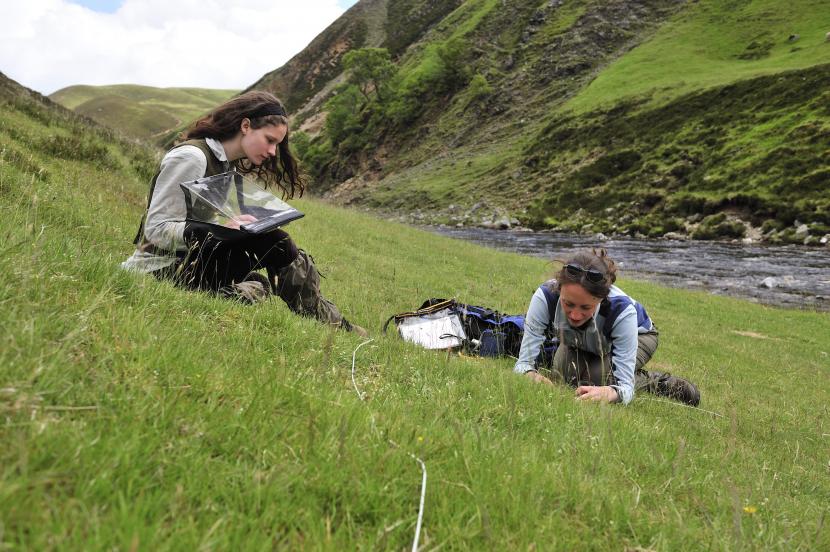
Surveying a quadrat in Glen Tilt
Click for a full description
Louise Ross, a Phd research student from Aberdeen University and her field assistant surveying a quadrat in Glen Tilt, Tayside and Clackmannanshire Area.
Copyright: Lorne Gill/NatureScot
For more information contact:
Ivan Clark, Nature-based Jobs and Skills Manager, NatureScot - [email protected]
Becky Shaw, Rural Development Adviser, NatureScot - [email protected]
Find out more
- Nature-based solutions
- Young People - Learning Outdoors and Developing Skills. For information on outdoor learning for teachers and youth workers
- NatureScot and Youth Engagement to find out more about the programmes and projects we are involved with to increase access, engagement and environmental decision-making of young people in nature.
- Attracting young talent to NatureScot
- Podcast: Attracting young people to green jobs
- Video playlist: Early career advice for budding environmentalists
- Young people and the outdoors
- Working and volunteering with us
- Current vacancies